
Understanding and improving air quality in schools is a central goal of the LEARN project. A particular focus is on ultrafine particles (UFPs), which are smaller than 100 nanometers and pose significant health risks due to their ability to penetrate deep into the body.
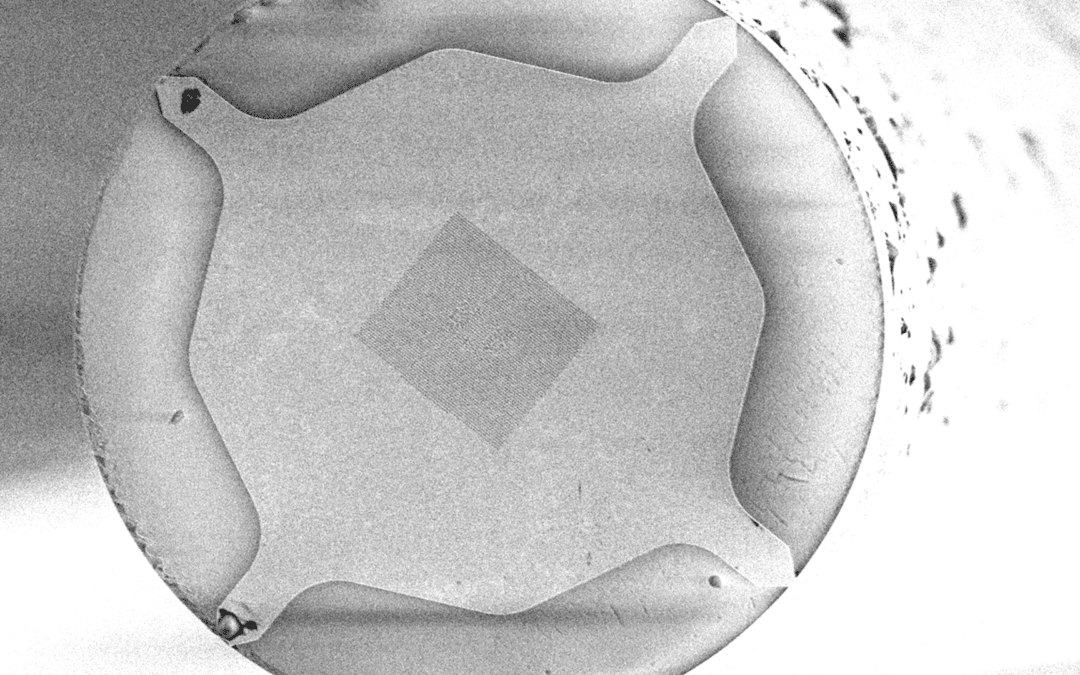
Existing sensors focus on larger particles and fail to measure UFPs accurately, leaving their presence in classrooms largely unknown. To address this gap, the LEARN project introduces a miniaturised nanophotonic sensor integrated on an optical fibre tip.
This sensor uses a photonic-crystal cavity to confine light in a sub-micrometre region, enabling high sensitivity to refractive-index changes caused by nanoparticles. Proof-of-concept tests have demonstrated single-particle detection down to 50 nanometers, validating the approach for real-world applications.
The next challenge is ensuring efficient delivery of UFPs to the sensor in practical environments. Researchers are testing two methods: capturing particles in liquid and guiding them in air using electrostatic forces and inertial impaction. Next steps include combining optical readout with delivery systems, expanding detection areas for LED-based setups, and developing autonomous, low-power prototypes for classroom use. These advancements aim to enable widespread monitoring of UFP exposure, supporting healthier indoor environments for children and providing valuable data to link exposure levels with health outcomes.